

The University of Cambridge has finally published the terms of reference for the academic standards and integrity strand of its review into the Dr Jason Arday affair. But for all the apparent comprehensiveness of its stated remit, concerns remain that questions raised with CAF by academics and students regarding the institution’s assessment of his scholarly record, its handling of research integrity concerns, and the possible influence of positive action on recruitment may remain unanswered.
Following weeks of uncertainty over the precise scope of what is formally Part Two of the inquiry, the appointment of Jason Beer KC and publication of his remit provide the clearest indication yet not only of how Cambridge intends to examine the circumstances surrounding Arday’s appointment, but also of how the University’s review differs from the separate independent investigation commissioned by CAF.
That there are serious questions warranting independent investigation is beyond doubt. Cambridge is, after all, one of the world’s oldest and greatest universities, and the standards by which it chooses those who will shape its intellectual future help define an academic culture whose influence extends far beyond the University itself.
Arday took up his position as Professor of Sociology of Education at Cambridge in March 2023, becoming, at 37, the youngest black professor in the University’s history. Perhaps unsurprisingly, he attracted overwhelmingly favourable national publicity, much of it focusing on his account of overcoming significant and persistent childhood difficulties and his startlingly rapid academic career. As an articulate and engaging speaker, he soon acquired a public profile extending well beyond the university sector, with his personal story becoming almost as newsworthy as his academic appointment.
Yet media coverage took on a more critical tone in the summer of 2026, following a widely read blog post by the controversial “race-realist” philosopher Dr Nathan Cofnas, which combined detailed allegations of plagiarism in Arday’s PhD thesis and other academic work with a broader attack on what he saw as the influence of Cambridge’s equality, diversity and inclusion policies on academic recruitment.
This single intervention helped propel into the national spotlight a story that had previously only attracted the attention of specialist higher education journalists, bringing to a wider audience questions previously discussed largely among academics, some of which had already been raised directly with Cambridge.
As far back as May 2023, for instance, Emeritus Professors David Harris (Plymouth Marjon) and Martyn Hammersley (Open University) privately raised concerns about apparent inconsistencies in Arday’s published research with senior figures at Cambridge, including the University’s Head of Policy, Governance and Integrity. Harris, in particular, had identified what he described as “puzzling similarities” between passages in Arday’s 2018 article Understanding Mental Health: What are the Issues for Black and Ethnic Minority Students at University? and a study published in 2016 by the epidemiologist Professor Anjum Memon and his colleagues. Cambridge declined to investigate the allegations formally, citing guidance from the UK Research Integrity Office (UKRIO), which states that institutions “are responsible for the research conducted using their facilities and resources or in their name”, and maintaining that allegations of plagiarism should be investigated by the institution where the research was undertaken, rather than by the university employing the academic.
The Guardian also reported that Arday had threatened to report the then 75-year-old Harris to the police for harassment after he attempted to contact Arday by email about the concerns. Professor Hilary Cremin, then Head of the Faculty of Education, subsequently apologised to Harris for the tone and manner of Arday’s emails threatening police involvement. She also discussed the academic concerns directly with Arday, arranging a meeting with him and her director of research to examine his 2018 article, Understanding Mental Health. In correspondence dated 21 June 2023, she explained that Arday had expressed a wish to take the article down from the journal’s online platform to address the concerns and re-upload it, while nevertheless insisting that the Faculty remained “immensely proud” of his achievements and scholarship and that he had its “full support”.
In December 2023, MDPI published a substantial correction to that article, documenting amendments across its abstract, introduction, methodology, discussion and conclusions, among other sections, “to increase the clarity of citation sources within the text”. The changes addressed the previously unacknowledged overlaps identified by Harris with the 2016 study by Memon and colleagues, alongside deficiencies in the attribution of other earlier research, including a 2013 peer-reviewed study by Tracy Grey and colleagues, and involved the insertion of numerous missing citations.
The following year, academic publisher Taylor & Francis issued a correction to one of Arday’s co-authored articles, Attempting to break the chain: reimaging inclusive pedagogy and decolonising the curriculum within the academy, documenting amendments to four paragraphs of its methodology section to clarify the relationship between the research presented and earlier studies. Two references were also added: one to an earlier publication by Arday employing similar methods, and another, as with the 2018 article, to the study by Memon and colleagues on which those methods had been based.
In 2025, Jack Grove, a journalist at Times Higher Education (THE), became the first person to investigate Arday’s PhD thesis for plagiarism, identifying extensive passages in the thesis that, without proper citation, reproduced or closely followed material from a 2009 dissertation by Paula Zwozdiak-Myers, then a researcher at Brunel University and now a Reader in Education at the same institution. His investigation also uncovered further passages apparently taken from the work of researchers based in the UK, US, Australia and the UAE. By September, he had assembled a detailed report of his findings, eventually submitting a total of 97 pages of evidence to both Cambridge and Liverpool John Moores University (LJMU), which had awarded Arday his doctorate. Unlike Cambridge, LJMU investigated the allegations, declining to uphold them after concluding that the citation problems arose from “honest and reasonable error”.
Arday’s response to Grove’s inquiries was to instruct the law firm Carter-Ruck to write to THE, warning of the reputational damage publication of Grove’s findings could cause. The publication subsequently decided not to run Grove’s investigation, a decision he later attributed to the threat of “ruinously expensive” litigation. As in Harris’s case, a harassment complaint was also made to the Metropolitan Police concerning Grove’s inquiries. Although the police quite rightly closed the complaint concerning a journalist pursuing a legitimate public-interest investigation without further action, Grove was nevertheless told by an officer not to contact Arday again because his “mental health” had been affected by the questions.
With allegations of academic misconduct and concerns about the use of harassment complaints against those investigating them gaining traction in the national media, wider questions began to emerge about Arday’s qualifications, claimed academic affiliations and his personal history.
On 28 July, The Telegraph published the results of its own examination of Arday’s PhD thesis, identifying more than 100 passages identical or nearly identical to material in Zwozdiak-Myers’s dissertation, effectively corroborating Grove’s earlier findings.
The scrutiny intensified on 1 August, when The Guardian published a wide-ranging and unexpectedly critical investigation into Arday’s academic record and personal history, including his accounts of alleged racist intimidation and violence at Cambridge. On two occasions, he claimed to have been confronted by a masked intruder in his faculty building, the second time at knifepoint. But despite enhanced CCTV security following the first alleged incident, neither intrusion was captured on camera, nor did anyone else report seeing the intruder. Arday also claimed to have activated a panic alarm during the second confrontation, but no security personnel responded, despite all being on duty. Remarkably, he neither alerted colleagues to the presence of an armed intruder nor interrupted his working day, conducting a PhD viva less than two hours later.
Further revelations followed in The Telegraph, which reported on 5 August that Arday had repeatedly presented himself as the author of Being Young, Black and Male: Challenging the Dominant Discourse, supposedly published by Palgrave Macmillan, although the publisher confirmed that the project had been abandoned years earlier. The universities of Glasgow and Ohio State also denied his claims to have held visiting professorships at their institutions, while Nelson Mandela University in South Africa disputed the visiting professorship listed on his Cambridge profile, confirming that he had instead held a fixed-term adjunct appointment.
Later that day, Cambridge announced that it would investigate what it described as “new information” concerning Arday’s academic qualifications and honorary appointments. Shortly afterwards, Arday resigned from his professorship.
A week later, on 12 August, Vice-Chancellor Professor Deborah Prentice announced an independent examination of the circumstances surrounding his appointment. Acknowledging concerns “across the University and well beyond it” about this “damaging and difficult case”, she reached not for the language of welfare or support, but immediately invoked Cambridge’s centuries-old commitment to “the highest standards of academic excellence”. There was, she said, a need to “understand if there is more we could do when serious allegations are raised in relation to our own academic standards at Cambridge”. The investigation would also feed into a review of the process for appointing senior academics. His case, Prentice later added, was an “aberration”.
Just two days later, on 14 August, with one national newspaper having published speculation from a psychiatrist about a possible psychological explanation for Arday’s “outlandish claims” – despite his acknowledging that he had never met Arday, did not know what was happening in his mind, or how much truth there may or may not be to his life story – Arday was found dead at his home in London, aged 41.
By the time the University unveiled its revised independent review on 4 September, both its architecture and its vocabulary had changed. There was still a promise to examine the institution’s “decision-making, policies and organisational processes”, but the inquiry would now proceed in two parts. One would continue the investigation Cambridge had already proposed, with an expert panel “including individuals with lived experience” looking at senior academic recruitment, research misconduct and the wider institutional processes surrounding Arday’s time at the University. But ahead of it came a new, expedited inquiry, led by former Chief Crown Prosecutor Nazir Afzal, into the “support, interventions and protections” available to Arday before his death.
And in Prentice’s accompanying statement, it wasn’t difficult to discern where the emphasis of the University’s most senior official now lay. Gone was Arday the recruitment “aberration”. Gone, too, was the invocation of Cambridge’s “highest standards of academic excellence”. In their place came her description of the “appalling period of external criticism and focus” Arday had endured. “Given the devastating outcome,” Prentice said, “we are all asking ourselves whether we could have and should have done more.”
The publication, on 4 November, of the detailed terms of reference for Part Two of Cambridge’s independent review therefore marks an important moment. Beyond the University’s shifting public statements and assurances, we now have something more substantial: a formal account of what the investigation is expected to establish, and the questions it will leave unanswered.
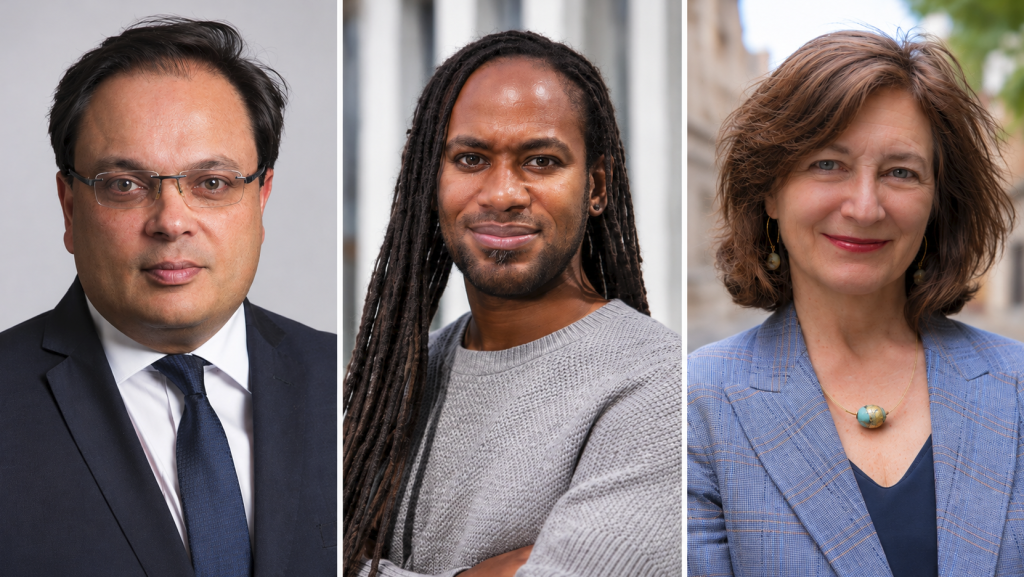
Chaired by leading silk Jason Beer KC, who specialises in public inquiries, inquests and public law, the review is undoubtedly in safe hands. It is also wide-ranging, covering the recruitment and appointment of professors, induction and mentoring, the University’s handling of allegations of research misconduct and related concerns, support for academics facing public and media scrutiny, and the treatment of race, disability and inclusion in institutional policies and practices.
Whether this breadth comes at the expense of depth of analysis in each area remains to be seen. But at least on paper, the review will examine whether Cambridge properly verified Arday’s credentials, whether its due diligence was adequate, and whether the University followed its own recruitment procedures. It may also consider whether those arrangements provided a sufficiently reliable basis for academic judgment, leaving open the possibility of highly critical findings about the University’s handling of the appointment.
From an academic perspective, however, there are two significant matters that remain outside its scope: first, the review will not independently assess the scholarly merit or integrity of Arday’s published work, or reach a retrospective judgment about his academic suitability for the professorship; and second, it will not seek to determine whether allegations concerning his research, qualifications, academic record or personal history were substantiated.
Why is this black-boxing of academic judgement problematic? Because in academia, assessing the quality, originality and integrity of scholarly work is not simply a matter of verifying credentials on paper, but requires informed assessment of the significance of a candidate’s contribution to their field, drawing on disciplinary expertise and scholarly standards that cannot be reduced to procedural checks.
In that sense, a professorial appointment is not simply a clunk-click verification exercise, but an institutional endorsement of a scholar’s standing, grounded in the informed judgment of their academic peers.
The tension is apparent in paragraph 18 of Cambridge’s own terms of reference:
“It will not conduct an independent assessment of the scholarly merit or integrity of Professor Arday’s published work, nor make a retrospective academic judgement about his personal suitability for appointment. This does not prevent Part Two of the Review from examining the University’s responsibilities to assess and verify information relevant to Professorial appointments, including the standards, evidence and procedures applied in Professor Arday’s appointment.”
This leaves a possible gap between the administrative indicators by which academic merit is assessed and the intellectual qualities those indicators are supposed to represent. A university might require a candidate to have published a certain number of articles, secured research funding or demonstrated an established international reputation. Yet the existence of these quantifiable and verifiable indicators tells us relatively little, by itself, about the originality, rigour or scholarly significance of the work in question.
Whether this is what happened at Cambridge is another matter altogether. The risk, however, is all too clear: an appointments process may be impeccably documented, its criteria consistently applied and its requirements formally satisfied, while the substantive quality of the scholarship remains open to serious question. Without independently examining that scholarship, an inquiry may be able to establish whether the University’s procedures were followed and whether they provided a credible basis for academic judgment, but still be unable to determine whether the appointment itself was academically justified.
That is, in part, why CAF has commissioned its own independent investigation, chaired by Professor Lord Singh, with investigative work led by journalist Nick Wallis and an advisory panel comprising Professors Steven Pinker, Alice Sullivan and Robert Tombs, and Labour life peer Professor Lord Glasman. Unlike Cambridge’s review, our investigation will seek to assess Arday’s academic work against Cambridge’s professorial criteria and REF standards, examine the evidence supporting allegations of academic misconduct, and scrutinise the University’s handling of concerns.
Only time will tell how the findings of the two investigations will compare. But the success of our own investigation will depend, in no small part, on the willingness of those with relevant knowledge to contribute evidence. For that reason, CAF strongly encourages current and former academics, students and other members of the University community, as well as others with relevant knowledge, to come forward.
Anyone wishing to contribute can contact the Investigator directly at investigator@ardayinvestigation.net.
Further guidance, including arrangements for particularly sensitive material, is available at ardayinvestigation.net.